Showing posts with label history. Show all posts

Tuesday, March 18, 2014

Thoughts about the Ukrainian conflict

I've been watching the news in Ukraine with interest.  Obviously, as an ethnic Ukrainian I have an interest in what happens to the country.  Also as a Russian history major  I have an interest in how the two countries work out their differences.

Some brief thoughts about the conflict:
-Many Russians consider themselves the same ethnicity as Ukrainians. Ukraine is just another province or state, much like Alaska is for the U.S.  (Or  Quebec is for Canada).  So it's not cut and dry, but many Russians see this differently than Ukrainians.

-History is everywhere with this conflict.  Stalin and the Soviet Union committed genocide against the Ukrainian people. He starved millions of Ukrainians and had armed guards around the granaries.  He punished people for speaking Ukrainian. My great uncle returned to Ukraine in the 1980s as a Ukranian speaker and teacher.

Thanks for nothing Khrushchev!
-Crimea itself was a part of Russia/the Soviet Union until 1954 when Khrushchev gave it back to Ukraine in a political gesture.  This piece of land has been fought over for a long time and has changed hands often.

-In fact, my great-great grandfather lived in the same place in Ukraine but was a citizen for four different countries.  Austria-Hungary, Romania, Ukraine and Russia.  The territory has been fought over and changed hands often (as Colbert points out, anyone who plays Risk knows this).

-East vs. West in Russia and Ukraine has been a long standing tension/philosophy.  Most historians agree it started with Peter the Great.  Throughout modern Russian history figuring out that balance of embracing the west and western culture while keeping the unique parts of Slavic culture has been a challenge.  Anyone who doesn't see that tension doesn't understand some of what's going on behind the scenes in this conflict.

-While the Soviet Union was a great geo-political power, that country failed.  The political system failed, for many reasons.  Returning to those days is not feasible.  Both countries need to move forward, to continue to grow and reform.  Sure, lots of older people/pensioners in Russia wish for the day when things were stable and guaranteed.  But that stability was based on the blood of many dissidents and on genocide.  Going back is not tenable. Both countries will need to reform and make changes (some difficult changes) to make things fair and equitable.
Communist rally Moscow 1996

I support de-escalation of the conflict - a diplomatic solution.  There may yet be a diplomatic solution possible.

I don't support countries invading other countries' sovereign territory.  I support Ukraine.

It is in the U.S. interest for both our political parties to work together for a resolution to this conflict - not to let party politics get in the way.

I don't want to see open war between the two countries, and I hope that doesn't happen.  It would be (for me) a little like the U.S. going to war with Canada.  It would be a poor solution and no one would win.

Monday, February 18, 2013

History as we want it to be

***Downton Abbey season 3 spoilers ahead!  Don't read if you are sensitive to spoilers***


Like many Americans, I've been watching Downton Abbey.  It's a good program, although at times it can be rather soapy.  And a part of me is surprised by its popularity, since I've enjoyed most Masterpiece/BBC programs for quite some time.  I'm not sure what's so unique about this.

However, in one of the episodes of Season 3, there was more than a small anachronism.  Thomas (the valet) is a closeted gay servant.  He's also caused quite a bit of trouble and drama from day one in the household.  (Remember all the trouble Mary got into during the first season with Mr. Pamuk?  That was Thomas' doing).  In this season (after the war) he's back in a life of service. 

He mistakes another servant's friendliness for a love interest (with the help of another scheming servant, O'Brien).  Barrow hits on him (the character Jimmy) and is discovered by another footman. 

The point of all of this is, while some of the servants are shocked and dismayed, in the end, everyone accepts that Barrow is gay.  Even Lord Grantham doesn't have an issue with a gay servant.  This is the same Lord Grantham who, for the record, was shocked that his daughter married a chauffeur and that his granddaughter was going to be baptized Catholic (the horrors).  Also shocking for the Earl, his daughter wearing pants and another daughter writing for a magazine.

It would have been wonderful if in the 1920s, it was not a big deal for someone to be gay.  If gay men and women weren't repeatedly arrested and socially ostracized.  But the truth is, being openly gay was still listed as a disease in the DSM until 1986.  The American Experience program about Stonewall was amazing to me. Clubs were raided and upstanding citizens were arrested, simply for being gay.  Looking at Evelyn Waugh's Brideshead Revisited, set around the same time, had an upper class gay character - who ends up full of despair (because at the time, gay characters couldn't be successful and happy - they were doomed to ruin).

The mormon church is far from 1920s Edwardian England, but I can quote many mormon church leaders who agreed with this disease model.  In church leader Spencer W. Kimball's book The Miracle of Forgiveness, it says that it is better for someone to come home dead than dishonored.  This book and its message has been repeatedly discussed in the bloggernacle, but has never been formally repudiated by the LDS church.  Even in 2010, an LDS church leader (Boyd K. Packer) implied that god would never make anyone gay.

But in fiction, we don't have to be fully honest or historically accurate.  Even if it is unlikely that an openly gay servant could remain in a conservative household, the creator could stretch reality.  And there are many uncomfortable parts of human history, some of which we would rather ignore.  I would like to pretend that the United States wasn't founded with slavery.  I would like to pretend that women weren't treated as property for most of human history. 

But that's not the truth. 

This slate article explains that each character defended Thomas for their own reasons.  So perhaps it does work.  I am simply wary of revisionist history that ignores the very real sometimes violent struggle that many people had to face, for human rights.  If we don't accurately depict the way things were - it diminishes how much we have had to overcome.

Sunday, February 3, 2013

Game of Thrones vs. The Wars of the Roses

I watched the Game of Thrones series last year, on dvd  - season 2 is coming out later this month.  I really enjoyed it.  It's incredibly violent, and sexual - so your mileage may vary.  I had a sinus infection earlier this month - and I spent about a week and a half reading books 2, 3 and 4. 

It's not a secret that the series is loosely based on the wars of the roses in 15th century England.  Even the family names, Stark and Lannister sound more than a little like York and Lancaster.  I know only a bit about the history, but the war of the roses involved incompetent kings who were deposed, teenage kings who mysteriously disappeared, even people drowned in casks of wine. 

I've also been reading Alison Weir's The Princes in the Tower.  The similarities are striking. The king (Edward IV) secretly marries a so-called commoner, Elizabeth Woodville. (Her mother is a noblewoman, her father was a knight).  Her large family is then promoted in positions of power.  Not surprisingly, many people are unhappy about this. There are all sorts of houses with associated lands that the kings redistribute.

And there is this tension between north and south -at one point the author points out that British people in the north and south really thought of themselves as separate races or people.  It was also common to believe that physical deformity (if Richard III really did have a hunchback) was a sign of moral depravity or sin.  Families are opposed to one another (and intensely suspicious) for no other reason than politics - if the other person isn't a part of your family, they are inherently untrustworthy.

The Stark children - won't be this way for long!
So there's a large part of me that is incredibly grateful to not live in that time period - dependent on nobility and family wealth.  Most people were wholly dependent on the whims of potentially insane people, no rule of law, fair trials, etc.  While many women have some power in the Game of Thrones series, it's always very clear that women are completely dependent on men, and cannot have power in their own right. It was a brutish time (the Middle Ages). 

I'm not sure why this time period (or the series) are so engrossing for me.  I've always enjoyed medieval British history (who knows why).  I enjoy the history in spite the fact that I know how many problems the British monarchy (and others) caused throughout the world.  The Game of Thrones series also has just enough fantasy as well, with dragons and zombies - some magic that actually appears to be real. There are many strong female characters in the series, as well as fully developed male and female characters.  I recommend it.

Monday, November 12, 2012

Cave of Forgotten Dreams

I was going to e-mail my friend NN about this film but I thought - why not recommend it to everyone?  She has a great post about cave art here.

I watched this documentary film recently.  Some parts were choppy and it may have been longer than it needed to be.  Maybe it would have seemed less choppy if I had seen it in 3D.

But the cave art was amazing.  The notion that people 30,000 years ago had the time and wherewithal to paint animals on this cave - on any cave is inspiring.  I suspect there is something about being human that inspires us to create art - to leave a legacy for our descendants.  There is an urge towards communication - to find common understanding.

___________________________________________

I was having a conversation with my kids about whether or not cavemen were stupid.  They claimed that cavemen were stupid.  I suspect it's related to some tv commercial that makes that implication.


Anyway, I explained that cave people were probably not stupid.  No one had made a spear before, but they had to figure it out.  And use that spear to find food.  They had to figure out what could be eaten - how to stay warm through the winter.  That would have taken a great deal of intelligence.  In the film, an anthropologist throws a spear replica.  I'm grateful that I am not dependent on bone tools for food!

Upon further reflection, I remarked that their brains were probably smaller than our more modern brains.  So they may have been a bit less intelligent. 

But my awe still stands. It's amazing that our species survived and has reached the point we have where we aren't forced to hunt and gather for food.  It's amazing that we are almost completely separated from seasonal impact - from the winter and summer. 

Thursday, October 6, 2011

Great Men Theory

There is a theory of history that great men shaped our current society.  Regular, normal people could not do it, could not build empires or win wars, but these men did.  And their mothers, of course, who shaped them (tongue in cheek here).  Think Julius Caesar, George Washington, Christopher Columbus.

While these men are important, I think it's worth noting that only very rarely does some act completely alone.  There are always people who make it happen.  Either they were the grandparents who worked overtime to send a child to college, ancestors who moved to a land of more opportunity or even the silent long-suffering spouse who does everything so the artist can create.

That was my response to Malcolm Gladwell's Outliers, and it's my response when I hear the claim that one man or woman changed a generation.  In Outliers, Gladwell outlines just how so many successful men became life-changing and revolutionized the way we view things.  There were a whole host of factors that created an environment where change was possible.  A host of parents, teachers, community members, economic realities nurtured success. 

While leadership is important, it's shortsighted to believe that only a leader is responsible for success, of a country, of a company, of a school.  It's the people who go to work every day, the parent(s) who are there each night, the people who make change possible. Great figures are a strange coincidence of fate and possibility - being in the right place at the right time. Would they be great if they had to spend hours doing their own laundry? I wonder.

That's not to say we shouldn't mourn someone's passing, or recognize a person's good deeds.  And it is true that sometimes a person is not appreciated now, but is appreciated with the passing of time.

I believe we sell ourselves short when we don't recognize that our everyday efforts might lead to bigger and better things - and may lead to change. 

Whether or not it's true, many public figures will recognize this.  They will mention all the people who helped them along the way.  That's not necessarily false humility, I believe they mention it because it's true.       

Friday, April 2, 2010

The walk of cultural shame

I heard this npr program about The Scarlet Letter the other day. 

I read Hawthorne's novel back in high school, but somehow I never truly comprehended some of the overarching themes.  I suppose that's why it's important to keep an open mind to literature discussions throughout one's life.

I doubt it was due to my English teacher, however.  It's true that there are some additional things my Junior year English teacher could have mentioned, but I digress. 

I do think the concept of shame and sin are difficult concepts for a teenager to understand.  Granted, sometimes teens are underestimated, but there is life experience that can be necessary to gain true perspective (in my opinion).

Needless to say, on this program, the commentators compared the society of the Puritans with our current society.  One of the things my English teacher missed was that Hawthorne was comparing his society with the Puritans as well. 

I wouldn't have thought that we had a great deal in common. 

The Puritans were a sober bunch, not celebrating holidays, not listening to music, strict laws on the Sabbath.  Most Americans have lavish celebrations, and there are few businesses closed on Sundays or holidays any more. 

But with recent alleged celebrity follies and their public apologies, perhaps there is more in common than initially appears.  Is there a reason we (as a society) need to focus on other people's mistakes?  That we need to feel righteous indignation?  That we feel we need these celebrities to both apologize, and to suffer?  I'm not excusing any mistakes, but is the rancor and venegence really necessary?

I simply agree with the npr panelist about the parallels between that world and some parts of our current world. 

Saturday, March 13, 2010

Faces of America

I recently watched this series, and I really enjoyed it.


So everyone already knows that I was a history major, and I actually don't mind the genealogy obsession.  See here and here.  While I'm not supportive of LDS proxy baptisms, but I think finding out more about one's ancestors is pretty fascinating.

The series was really, really cool. Not just because of the celebrities, but the perspective on immigration.  The perspective has changed so much in the last 300 years.  I loved the quote about Germans from Benjamin Franklin - that the German people could never fit into our country because of their complection.  And it wasn't all wine and roses either, families who were interned in the WWII Japanese internment camps, the potato famine, fights against the native americans, mining accidents. But lots of great stories, of people trying to create a government, trying to provide for their families.

But I find there's also a part of me that agrees with Meryl Streep, it's nice to have the family information.  But it would be even more remarkable to actually be able to find out about the women, the people in this history without a voice.  To find out what made them tick.  And that reality might not be pretty.  But it would be fascinating.

Friday, June 5, 2009

Guns, Germs and Steel

I don't know if I've mentioned recently how much I enjoy my book club. I'm still participating, and we are still reading fabulous books. This is one of the books I suggested last year.


I recommend this book to just about anyone (including former mormons in particular). It is long and at times, difficult to wade through (wordy). This is exactly the type of book I would have been assigned to read in a college history course. I don't think that should discourage anyone. It was certainly much more interesting than some of the assigned readings I remember.

It has a lot of information about why various countries and cultures are in the situation they are in currently. Some countries control most of the wealth in the world, and others don't.

The distribution of large mammals/animals that could be domesticated appeared to be a huge factor. Most of those animals were based out of Eurasia, not Africa, North or South America. There were also more species of edible plants based out of Eurasia originally than those other continents. Diamond includes data (charts and graphs) to back up these assertions (as well as an extensive bibliography).

The book club discussion was lively, even among the few people who joined us for the discussion. The discussion leader had set up the projector to view parts of the pbs special - we didn't even get to a "lull" in the discussion to view the scenes.

My only personal question was with his assertion about the north/south axis of the various continents vs. the east/west axis. Diamond claimed that various plants and animals didn't spread throughout the continents (North and South America and Africa) due to the change in climate. It is certainly true that there is a huge difference between the climate in Maine than Florida or Texas. And I think it would take a great deal to attempt to cross a desert if one didn't know when or if the desert ended.

But with that said, I also believe people will do just about anything to save themselves and their families from starving. In other words, people move towards paths of least resistance. Humans are resourceful and have a great deal of courage. I saw this myself the other day, someone had parked in an empty gas station lot with their pick up truck, selling watermelons. It's too early for watermelon season here - so my guess is this person had driven from a place where watermelons are currently ready for harvest (i.e. Texas or Florida). And as a phenomenon, this is incredibly common. People move to where the work is, to a place where they can feed their families.

In an epilogue in a later edition that I read, Diamond acknowledged that there were still many fields for research and encouraged scholars to investigate those fields. I will definitely be reading his "Collapse" book as well. This book challenged many assumptions, and included the data to back up Diamond's theories. I recommend

Sunday, April 5, 2009

Technology

We had another successful pitch in last night, complete with a fire in our backyard. I'm fairly certain that fires are illegal within the city limits. But our neighbors have been forgiving so far.


I've loved tending and watching fires for many years. I'm not sure what it is, the process itself is relaxing for me.


I began studying Greek mythology with this book, which my fifth grade teacher had in her classroom.


What can I say, the notions of a strange belief system with gods and goddesses appealed to me. I liked the notion of a goddess who tended fire
see wikipedia entry on Hestia. I loved the idea of a ritual fire. Sadly, she didn't have many adventures or tales passed down about her exploits (unlike Ares or Athena).

I was simply musing the other day about how technology and fashion make entire trades and crafts obsolete. Keeping and tending fire is no longer necessary for survival. We have central heating and electric stoves for cooking. If we need to start a fire for pleasure, we have matches.

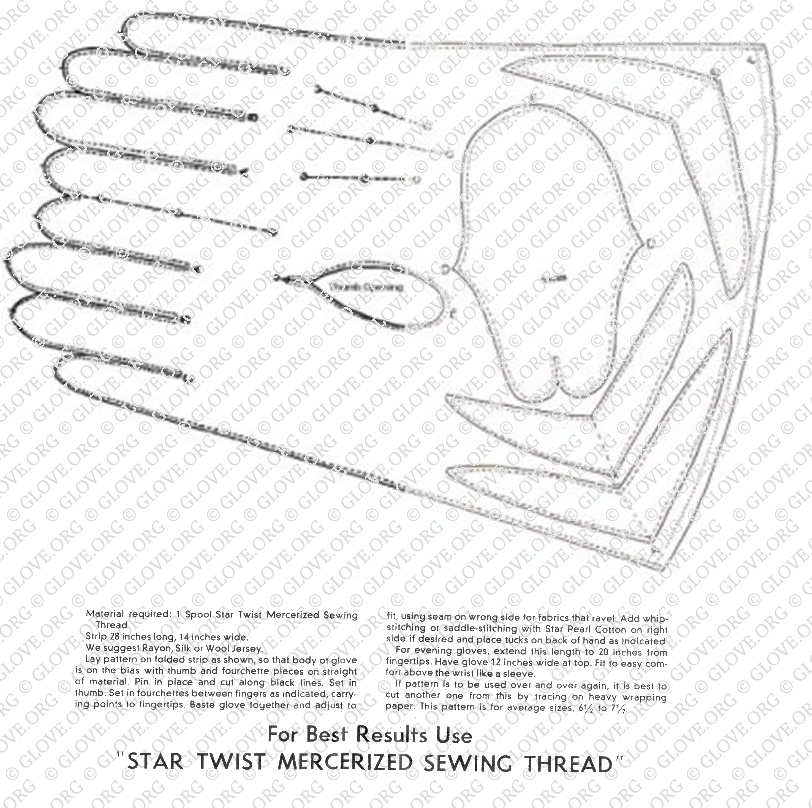
It's the same with glove makers. At one point, a woman wore gloves to everything. Countless novels from the nineteenth century have plots based on whether or not a character's gloves were in good shape or being worn. In The Awakening by Kate Chopin, I heard that holding hands without gloves was a euphemism for sex. Strange how at this point, society has few misgivings about two people holding hands.


Locally, I saw that another dry cleaning business went out of business the other day. With fewer businesses requiring formal suits, dry cleaning is not as necessary for a family or community. Fashion is changing. Anyone can now launder their own khakis and collared shirt. Irons and Ironing boards are no longer the tools of the mystics.

As an amateur cultural observer, it's interesting to sit back and watch these trends. How we lived then, how we live now.

Thursday, January 8, 2009

The Past Informing the Present

As an amateur historian, I find the study of the past fascinating. But the question - how do we let the past inform the present is an incredibly difficult one. I've found it has to be a balance. We have to be aware of the past to shape our understanding and current decisions. But we can't assume that the past will always predict (without error)what may happen in the future.

I've found this to be a sticking point both for interpersonal relationships and larger
political/international issues or conflicts. An adult can't act solely in a vacuum - they have to be concerned with safety. This includes personal safety. On the other hand, a person can assume there will be pitfalls at every turn - when there may not be. Or that some sort of pre-emptive strike/confrontation is necessary - when it may not be needed.

If we assume no one will ever change, and no situations will ever be bettered - what hope is there? Where does that leave everyone? There are all sorts of possibilities to life, each day. From technology to cures for diseases. New understandings and perspective. I talk a little about my take on victimhood here.

I'm not advocating unreasonable hope here. I'm not even advocating a person should turn the other cheek seven by seventy times. There are all sorts of factors that come into play in every situation - from what a new president will really be able to do to conflicts in the middle east to be-friending someone on a social networking site.

I'm also not suggesting that there will always be miracles - that things will solve
themselves without work either. Sticking your fingers in your ears and singing "la, la, la - I don't see you" isn't always going to work (in fact, it probably won't work. I've tried).

What I'm saying is, humans take risks, each day. Nothing is sure - except change, death and taxes. Everything else is fluid. Life is not simple - I've learned that much in my short time on earth. These issues are not simple. If they were simple - things would actually be pretty boring. There always seems to be a "yes, but..." to many statements.

I just have faith and hope that things will end up how they are supposed to end up.
I do the best I can every day. I try to improve situations that can be bettered - with regard to my own health and safety (and respecting other people's boundaries). This year, I'm going to try and take risks, each day. The risk may just be a small step of recycling my diet coke cans - but I'll try to take it just the same.

But I'm also realistic - many situations don't change, many people don't change - and human nature will probably remain the same - throughout my lifetime.

So - how have things changed over time for you? Has your understanding of things changed? Are there things with simpler solutions than you thought? Where do you think the past should stand in predicting yours (or others or geopolitical) behavior?

Saturday, June 21, 2008

me


Here I am holding forth. Opinionated even at a handful of months.


I'd like to think I'm looking pensive and inquisitive in this one.

Monday, June 16, 2008

Computers

I'm not sure why I was thinking of my first experience(s) with computers the other day.

I remember my first experience with a computer. I think it was a commodore (not sure which model). I was in the fourth grade. There was one computer for our entire elementary school. It may not have even had a mouse.

The computer was on a cart so it could be moved around. My teacher asked us how long we thought it would take the computer to count to one million. We gave different guesses, ten minutes, thirty minutes, etc. The longest guess was twelve hours. I think it ended up taking one week. It was amazing to sit and watch the computer (blue screen) with the numbers flashing.

Another memorable experience - we used to have "computer time" in the school library. I was in fifth or sixth grade at this point. This was a different school.

This is what the computers in the library looked like:


And we would play different games. One game I distinctly remember was The Oregon Trail.

I loved this game (future history major in the making, I suppose). Since computer time was only 30 - 45 minutes, I never made it all the way to Oregon. My family would die around chimney rock (you had to love those graphics) or time would be up. (The only way to get very far was to choose to be a carpenter, to fix the broken wagon wheels. You could be a carpenter, blacksmith or something else).


My children have already had lots of experience with computers. They know where the Thomas website is and the princess website (don't ask). They haven't quite gotten the hang of the mouse yet, but they do know where the first letters of their name(s) are. And so if I e-mail any of you and there are extra letters, you will know it was because I had a three year old on my lap begging me to hit the "G" (for goose, my daughter) or "N" (for Noggin, my son).