Another community in my state has voted to turn to year round school. There are different names for it, but that's what it is. Back in the day, the thought of year round school was widely denounced and villified (say 25 years ago).
As a parent, my experience has been the opposite. Year round school has been great for our family. The kids still have five to six weeks off in the summer. They have two week fall, winter and spring breaks. In the end, the total amount of time they spend in school is only a handful of weeks longer than a traditional calendar.
In the end, most families have parents who work full or part time throughout the year. They do not get the same amount of vacation that their kids do. The family is left scrambling for daycare, day camp or family members (or all three) to fill the void. All three can be expensive depending on the arrangements you make.
So the days of summer vacation as days without schedules or purpose are gone for most families.
I know of people who hire nannies for the summer months so the kids can hang out at the pool. And there are families who can afford to have one parent stay home full time even when the kids are in school. But there are disadvantages to that as well - most notably the retirement funds for the full time stay at home parent.
Yes, children need free time and time to play. They need exposure to the world outside of school. It's clear that they need unstructured time as well to develop creatively.
Some lawmakers (in my state) are stuck in this older reality. They assume that one parent can stay home, even when kids are in school. They lament that kids no longer have free time like they did. Which is fine - but it's ignoring the experience of most parents and families. Most notably, I've found this with my experience on the parent teacher association for the school. Most parents are working two jobs to pay the rent; they're not able to go to fundraising activities. And it's unrealistic to expect them to do so.
So the reality is, kids who aren't in school will probably be in some sort of daycare/day camp. How different is school from day camp anyway? Obviously most day camps are more activity/fun based than traditional school. Day camp doesn't usually have licensed teachers.
But to my mind, the only downsides to a longer school year are that teachers have to work more days and it may cost the state more. Day camp and school are much more alike than school and unstructured summer vacation days.
In Malcolm Gladwell's Outliers, he shares statistics that most upper and middle class children do not lose as much of their learning through the summer break. But for some families, particularly lower income families, the kids lose a great deal through the long summer months. So it seems to me, if we want to give those kids the best chance to succeed, and help support families - lengthening the school year is a great way to do it.
Originally, the summer break was simply to allow farm kids to help with the farm during planting and harvest season. Most Americans live in urban locations now, not on farms. So unstructured play was always a luxury.
Unfortunately, it seems to take forever for our educational system to adapt best practices/research based innovations. They were discussing early childhood education in the 1970s. Only now are both political parties beginning to recognize the wisdom of working with children earlier. Sadly, other countries have been engaged with both early childhood education and longer school years for years.

Showing posts with label education. Show all posts
Showing posts with label education. Show all posts
Thursday, October 25, 2012

Saturday, April 28, 2012
Teaching, Test Scores and Education
Back in college, I had a conversation with a friend about his prospects.
My friend claimed his grades didn't matter; how he looked on paper didn't matter. What mattered was that he could get in front of the decision makers and charm them (state his case). There are many definitions of privilege. To my mind, this is one of them. Privilege is being able to get an audience with decision makers despite not meeting the original qualifications.
I've been involved (more than I ever wanted to be) in recent discussions about education, school structure and test scores. For anyone not intimately involved in this current American educational debate, test scores now define everything in most schools. The scores grade the teacher's performance. The law is called "No Child Left Behind". It means, for better or worse, what I remember from my school days is not longer what most students experience. The students spend more time on math and reading, lots of drills and benchmark tests. They get less for everything else; music, art, p.e. (gym), science and social studies.
The school my children attend is a great school, but they have low test scores. So now they're trying to keep the good things about the school, while raising the scores. I don't know if they will be successful.
One of the arguments for focusing on the test scores is that life is full of tests. (This is the argument an administrator told me). It's true, my school life was full of tests. I had to take a test for college admission. I took a test for post graduate admission. I took a basic math/spelling test to be a temporary secretary back in the 1990s (I got the job despite my spelling errors, more privilege I suppose).
But in my career as an IT professional, I've taken exactly one test. Maybe I took a personality test when applying for jobs (I don't remember), but only one content based multiple choice test. And that one test was a fluke (incredibly rare for my field).
So I disagree that tests are a part of life. They may be a part of academic life, but not a part of life for all fields in the working world. Most companies have yearly evaluations (or some performance system). Schools and teachers need outside evaluation. That's how accountability works. I'm accountable to my boss and my company. If I don't do my job by assessment, I get fired. That's how it works.
I'm not a teacher and I wouldn't dream of being one. It's not my skill set. It's hard work. And I challenge anyone who thinks it's easy to try it. Not everyone can teach successfully. Not everyone can work in IT or as a chef.
Some politicians imply by their statements (or actions) that any businessperson could teach - or could perhaps be a better teacher than trained teachers. In the next few years, that fallacy of that thought will be apparent. Allowing an untrained person to teach (or assuming they can teach without any training) is like allowing an untrained mechanic to work on my car, or an untrained nurse to put together my I.V. What constitutes as training is debatable and something worth discussing. But assuming anyone can teach without having any idea of subject matter, ways of learning, etc. is ignorant.
How do we independently verify schools and teachers without testing the kids? How do we account for a host of factors that need to be accounted for in that evaluation? What about everything that happens outside of school - which the research shows is a bigger predictor of test scores (and academic success)?
I don't have any answers. I know the system is not working currently. And I don't know how well children are learning. Are they being exposed to the wide range of needed skills (in addition to reading and math)? How do they learn what they want to do as an adult?
And do the teacher's unions and administrators have too much power?
A good public education system has been the foundation of U.S. success. I know there are ways to reform the system. But so much seems to hit the law of unintended consequences. With NCLB, lawmakers wanted to ensure that schools were held accountable.
But what happened is schools started teaching to the test, and teaching to the middle (bubble) kids. The kids in the middle who can improve, not the very low or very high performers.
I trust the issues will be resolved soon. I know many kids will succeed no matter what type of education they receive. And success can be defined very differently. This issue is not a simple one, and is much more about what type of society we want to be and create than anything else.
Thursday, January 12, 2012
Roller Skating
 |
| Birthday roller skates - note the 1980s upholstery |
I haven't been on a pair of skates for a long time, at least fifteen years. I was unsteady on wheels - it wasn't exactly like riding a bicycle.
The interesting part was that my son and daughter were trying out skates for the first time. We rented carts - so they could push the wheeled cart for balance.
My son took to the skates quickly. He fell down once or twice. But before we left (less than an hour later), he was out of the practice area and flying around the rink. He wasn't as fast or steady as the experienced skaters - but he definitely reminded me of the "duck to water" expression.
My daughter did not understand the process intuitively. She held onto me (not the best strategy as I was unsteady myself). She fell once, and it really bothered her. Of course when you learn to skate, you sometimes fall. That's part of the process.
The well meaning owner stopped by as we sat on the side of the rink. He gave us a few pointers. Near the end, she was more comfortable and able to move.
Being the mom of twins, I have unique insight into the natural/genetic/social differences people have. It's clear that my son and daughter approach the world differently and have distinct skills and talents. There are things that my daughter learns effortlessly, but roller skating wasn't one of them.
How do people learn that some things are easy for them to grasp, and others need more practice? How do you stop someone (particularly a bright person) from becoming discouraged when they don't figure something out immediately?
It took me a long time to figure out that I couldn't do everything I attempted the first time. That just because someone else could do something - didn't mean I could. It means I'm human, it doesn't mean I'm less than anyone else. As a Mom, helping my kids figure out their strengths is important. It would be nice if our culture valued and rewarded each person's strengths.
Friday, December 16, 2011
Is there an Education Bubble?
I have read some theories about this, and I find I sympathize with them.
To be clear, I believe strongly in education and in an educated society. I support education and higher education.
With that said, is there really enough demand for all the institutions that exist here in the U.S.? Are there jobs for all the people attending these institutions? There are state sponsored universities, private universities, liberal arts colleges, community colleges and online universities. That's not including technical schools (I'll get to that later).
I have read many people who claim the U.S. doesn't have enough talent, enough graduates for the next few decades. I am skeptical of this claim.
I suspect if we looked closely at the data, we might see that it's not that we don't have enough institutions of higher learning. It's that the free market of education is not working. Ideally, people would go to schools and get an education in a field that was marketable. They might learn critical thinking skills along the way. The market would correct itself - to not have more majors than it needs, to not have more graduates than it needs. It would not have more schools than needed.
I wish I could be an idealist about this. But our society needs a wide range of disciplines to survive. Higher education is not the right fit for everyone, and not necessarily right for people between the ages of 18 - 22.
It becomes a sacred cow of sorts. By suggesting reforms to this system, it threatens many entrenched positions. Fewer majors in philosphy mean fewer professors - less time to focus on research and publication. Less prestige for everyone - students, parents, professors. That was an argument that I read that I agree with. High school teachers and counselors inspire students to go to the best school possible, sometimes the most expensive school possible. Counselors at that school encourage students to stay in school, continue paying the high tuition costs. Professors at that school encourage students to major in their discipline because they believe in the importance of their subject and because it makes their department seem successful. This was my experience, and I think it's not an uncommon one. Of course there are honest and realistic people along the way. But the system isn't built to encourage realism, it's built to encourage idealism - that a person might hit the 5% chance of success.
Trade and technical schools must be a viable option. From what I've read, that's where a need is. We don't need more history majors (speaking as a former history major), we need nurses, pharmacists and plumbers. Of course we need history majors as a society, but we need to have a successful mixture of all of these careers.
Learning how to think is also very important. But at what cost? Are we perpetuating stereotypes and unrealistic dreams? Are we teaching kids that after school ends they can't continue to learn and challenge themselves?
I may sound bitter, but I am still profoundly grateful to the graduate professor who laid out the facts for me in the 1990s about a graduate degree in Russian history. I would have loved to get a PhD in Russian history, and I'm confident that I could have earned one. But I would be struggling under tens of thousands (perhaps more than a hundred thousand) dollars in debt. There was a 5% chance that I could have succeeded, getting a job after graduation. Five percent is not a great bet.
Instead, I was able to find a field and career that is growing. It fit my needs and abilities. Again, it's not that the disciplines are not valuable. It's that we don't need the number that are graduating in their specialty - they can't find work and everyone suffers. How is that reasonable?
The really gifted, talented people will always be needed, will always find work. But it's disingenuous to imply that everyone can succeed in the current system. It's not true.
Education used to be the ticket to the middle class, but no longer.
So is there a bubble? There might be. I think we may be due for some sort of market correction. It's clear from some of the recent protests - students are realizing that what they were promised is no longer possible.
Thursday, October 6, 2011
Great Men Theory
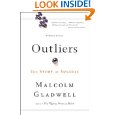
While these men are important, I think it's worth noting that only very rarely does some act completely alone. There are always people who make it happen. Either they were the grandparents who worked overtime to send a child to college, ancestors who moved to a land of more opportunity or even the silent long-suffering spouse who does everything so the artist can create.
That was my response to Malcolm Gladwell's Outliers, and it's my response when I hear the claim that one man or woman changed a generation. In Outliers, Gladwell outlines just how so many successful men became life-changing and revolutionized the way we view things. There were a whole host of factors that created an environment where change was possible. A host of parents, teachers, community members, economic realities nurtured success.
While leadership is important, it's shortsighted to believe that only a leader is responsible for success, of a country, of a company, of a school. It's the people who go to work every day, the parent(s) who are there each night, the people who make change possible. Great figures are a strange coincidence of fate and possibility - being in the right place at the right time. Would they be great if they had to spend hours doing their own laundry? I wonder.
That's not to say we shouldn't mourn someone's passing, or recognize a person's good deeds. And it is true that sometimes a person is not appreciated now, but is appreciated with the passing of time.
I believe we sell ourselves short when we don't recognize that our everyday efforts might lead to bigger and better things - and may lead to change.
Whether or not it's true, many public figures will recognize this. They will mention all the people who helped them along the way. That's not necessarily false humility, I believe they mention it because it's true.
Saturday, June 11, 2011
When did I become an activist?
Some months ago I was on the local news. I went to a parent informational meeting the local school corporation. It must have been a slow news week.
At the meeting, there was a powerpoint presentation and two roving television cameras. I assumed the tv cameras would film the other community members.
I said my piece, about keeping the arts (and sports) in schools. Also that I hoped all cuts would be on the table, that there were no sacred cows that couldn't be cut (administration, teachers, etc.)
The next morning, the first thing the lady who sits next to me said was "Aerin, saw you on tv last night". And my response was "What did I say?" I know things are taken out of context and spliced for sound bites. Fortunately, my co-workers (more than one) said I sounded articulate, which I was grateful for.
Everything they aired did not embarrass me, and I am proud to stand behind. My name was listed on one station, and a snippet of me talking (without my name) was on the other. Only one or two other community members (despite the tens who spoke) were filmed.
It reminded me, however, how public expressing one's opinion can be. And how someone may always be paying attention - whether or not that's expected. Your friends, co-workers, random acquaintances, employers or former employers are all the audience.
The other night I attended another school meeting, this time with the state board of education. I listened as community member after community member (including the state representatives) eloquently expressed their point of view. Professionals, students, former students, teachers spoke of the challenges facing urban parents and families. They pointed out the success of school/business partnerships.
I prepared as well. I didn't have a formal three minute speech prepared and rehearsed, as others did. And I had come prepared, dressed in an interview suit, wearing heels and make up- to potentially be on tv.
Yet this was the fourth in a series of meetings. Not the beginning or the end, and therefore not as newsworthy. Evidently there was a nearby reality show star in trouble. There are other stories that are more current, which gain traction. Not a school district's woes, the problems of poverty and the parents who show up to defend and explain why things are the way they are. Explanations that cannot be reduced to sound bites or even three minute presentations.
I find I'm relieved. I'm relieved not to be on the news again, or to have to explain my political views to my co-workers. I was not as prepared as I would have liked to be, in order to make my three minutes as effective as possible.
How can I explain my prespective in three minutes - and convince someone whose mind is already made up? Who sees the community as entrenched and corrupt - no matter what we say. They see us as the Irish were seen in nineteenth century New York politics, or how Chicago politicians are still viewed.
I'm not trying to decry traditional media. They are simply doing their job. In this culture of slogans,140 characters quips and cut throat politics - how can we make our voices heard? How can we tell a different story - particularly about issues that have no simple or easy answers.
And for that matter, how did I become an educational activist? I think I've always been one, but perhaps now even more so.
Friday, August 20, 2010
Kindergarten Homework and Uniforms
Some of my readers might be shocked that my two already have homework. I don't remember homework from kindergarten, personally.
Before I go on, I just wanted to explain exactly what the homework is. The first part is reading. Parents are supposed to read to their kids or with their kids three or four times per week.
This part of the homework is pretty easy, since we were already doing that.
The other part of the homework are simple worksheets and some suggestions. They have a list of "amazing" words they are learning, and at home need to use those in a sentence. The worksheets are along the lines of "find the letters in the picture" or match the shapes.
I am not a fan of the current "teach to the test" mindset. I think that it promotes kids who are good at memorizing and reguritating (ahem, like myself - I was a great test taker). Do kids every really learn what they need to know? Some of it sinks in. And schools should have ways to measure a child's progress and make sure that the kids are getting the education they deserve.
I also know that many people lament that kids are growing up too fast, aren't given enough time to play, etc. I certainly don't agree with over-scheduling kids. But reading with one's kids, discussing school and working simple worksheets are not unreasonable to my mind. This homework takes a grand total of 30 minutes some weekdays.
It allows parents to understand where their children are at (in understanding) and for the kids to see how much the parents' value learning. Is it busywork? Probably. Now if the homework weren't age appropriate, that would be one thing.
____________________________________________________________________________
The school my children attend requires uniforms. Back in the day, I would have chafed at the idea of uniforms (I wasn't nominated as more original dressed in the yearbook for naught).
I have to admit, I really like the uniforms. Basically, the district has said that the kids have to wear a handful of plain colored collared shirts and khakis. There are three or four various colors for shirts, pants, shorts and skirts. So it is still very possible to be original within the guidelines. The brands of clothes aren't important either.
The school is full of kids from different socio-economic backgrounds. Whenever I see all the kids - you can't tell which kids are from families who struggle, and which families are better off. I'm sure if I looked closely, I could probably tell.
But the pressure is off the parents to buy the latest over-priced outfit from an expensive designer store. Or multiples of these types of outfits.
And it's not as if kids won't eventually need to get used to uniforms or a dress code. Almost everywhere I have worked has had a strict definition of what is acceptable and what isn't. Some argue that kids will not have the responsibility or ability to be unique, and I can understand this argument. But for now, it's made getting ready for school a lot easier for us.
I grew up in a neighborhood where many of the families were much wealthier than we were. Some of this will happen anyway - the subdividing and cultural shifts. The longer this subdivision of class can be held off, the better - to my mind.
Thursday, August 12, 2010
Stay at home parenthood hindsight
Some friends/acquaintances of mine may be embarking on stay at home parenthood. I have some thoughts about this endeavor. Honestly, I think my thoughts are more about parenthood in general.
Live and learn, right? These are some things I wish I had known before having kids. These are some conversations I wish I had had before having one parent (not me) stay home with our kids. Yet I don't know that anyone could have told me this, experience is really the best education, right?
I appreciate (greatly) the time my husband spent with our kids while I worked outside the home. I think it was the right decision for our family.
Many people make different decisions and that's okay.
I really appreciated this guardian article about working moms - basically showing that factors for success in kids have much more to do with the stability of their parents and financial stability. Whether or not both parent(s) work is not as high as a factor.
Before the twins were born, I remember my husband and I talked with a friend who said that nothing changed when they had kids, or that they wanted as little to change as possible.
Ideally, yes, I thought that's what I wanted. I didn't want to stop going out to eat occasionally, stop hanging out with friends. And we haven't stopped those things.
But we have limited how much we eat out, and how late we stay out hanging out with friends. Both of those things are actually pretty important for kids. Kids need to have parents who put them (the kids) first.
Fortunately, both my husband and I are there. I think staying out until 3 in the morning gets old when you reach your 30s, and I think kids sometimes speed that process along.
So, the first thing I wish I had known was yes, things change when you have kids. And that's the way it should be.
It doesn't mean that a person should no longer have a life outside of their kids (at all). It just needs to be in moderation.
The second thing is, I wish I had done better about dividing responsibilities for child care and for house care with my husband. I think this line is very difficult to draw for many couples, and many parents.
Someone always ends up cleaning the toliets, or paying for someone to clean toliets. That's just life.
My advice? Parents or a couple need to work constantly on who is responsible for what, and making things equitable or as equitable as possible. All the housework, maintenance should not fall on one parent or the other. I know this sounds obvious, but day to day it can be difficult to navigate.
Third - I wish we had talked more about how to handle the situation when one parent is sick. I can't find my post, but it can be really hard to find a babysitter you trust. It was really hard to find a babysitter - and I'm still not sure we have a person, during the school year who can watch our kids as "drop in". That service barely exists - if at all.
It's not right or appropriate that the stay at home parent simply "work through" the illness. So figuring out a good mix is important. This is where extended family and grandparents come in - but if a person doesn't have that, it can be difficult.
Fourth - Pre-school was a great option for our kids. I am so glad we did parents' day out. I highly recommend it for any parents who stay home.
Some people feel that kids are pushed to do too much too early; they lament that preschool has become mandatory. I do not believe pre-school is mandatory, but it is a great resource for kids and families. For my kids, it has helped make the adjustment to full day day camp and kindergarten almost seamless.
Finally, I think these need to be constant conversations between a couple. Re-visiting, re-evaluating factors in stay at home parenthood. There are costs involved in both parents' working, in one parent working outside the home - including costs to both parents, to the kids, etc.
Who cleans the toliets? Who changes diapers? Who puts the kids to bed each night? All of these things can be re-visited and should be re-visited if either parent wants to re-evaluate.
I've heard feedback from other parents that one parent felt really strongly about the stay at home parent issue. And that's great. It still needs to be a mutual decision that can be re-evaluated by the couple.
Thursday, July 22, 2010
School
My twins started kindergarten this week. It hasn't been the easiest change for me. They got into this school, the one we had hoped. Still, it was a difficult day for me to put my kids on the bus. I think it's all the changes involved with going to school, to a real school. There is so much out of my control. And it means that they are growing up. It's bittersweet, for me.
The good news is, they appear to be doing just fine and are enjoying themselves. Some bumps, but everything is going smoothly. At some point, I might write about why we decided to put them in separate classrooms. Evidently with twins, there are different theories. Some people believe in separating twins, others do not (or wait until later in school).
 What I realized was that *I* rode the bus to school, to kindergarten back in the day. I don't remember that being particularly traumatic for me. It may have been difficult for my mom. She said that when I went to college, that was more difficult (for her), that she remembers.
<--This is me on my first day of school. Note my name and address pinned to the front of my dress.
I loved kindergarten. I loved going to school, meeting new people and learning new things. I liked school throughout the years. I'm trying to remember my excitement and give both my kids the space to feel however they would like.
The good news is, they appear to be doing just fine and are enjoying themselves. Some bumps, but everything is going smoothly. At some point, I might write about why we decided to put them in separate classrooms. Evidently with twins, there are different theories. Some people believe in separating twins, others do not (or wait until later in school).

<--This is me on my first day of school. Note my name and address pinned to the front of my dress.
I loved kindergarten. I loved going to school, meeting new people and learning new things. I liked school throughout the years. I'm trying to remember my excitement and give both my kids the space to feel however they would like.
Tuesday, July 6, 2010
Pre-school post
I have a post up at Rational Moms about the Christian pre-school my kids attended. Check it out!
Monday, August 10, 2009
Constant Learning
I'm not sure how the association started, that learning happened only by teachers in schools.
It doesn't, and learning can be a life long process. I think back to the presidents (to name a few) and other historical figures who were self- taught. People can learn new things and new ways of being.
It's not often that someone will actually admit to learning something new. But I did the other day.
I was watching the show survivorman - a wilderness expert tries to survive in desolate areas with limited resources. Anyway, this adventure was in Labrador.
I had never heard of Labrador before (Obviously I also didn't take geography during my school years). I had heard of Labrador Retrievers (a dog breed), but never associated them with a place.
It's true, you can learn something new every day.
Friday, May 22, 2009
Education
I was able to tour a local public school yesterday, one that is built on the notion that different things inspire different children.
I'm looking at schools due to the fact that we will need to start applying for various programs in the fall - and making decisions next spring for that year.
I want to have as much information as possible before making a decision.
My parents felt very strongly about education (and still do). While we moved a lot when I was younger, they always tried to move somewhere with a good school district. Often that meant that my family was on the lower end of the socio-economic scale - but I learned a lot. I received scholarships and assistance to college, - and while my own work was a good part of that, the schools/teachers/community that prepared me ALSO had a great deal to do with my success.
The school I toured yesterday was awesome. I am proud that it is part of my community, and that such schools are supported. It is based around the idea that music, art, science and physical education are just as important as linguistics and mathematics. The focus is on projects and concepts, not on rote memorization.
Tests, of course, focus on the linguistic and mathematical skill (typically).
But just because someone can take a test, doesn't mean they can be successful.
At this school, some of the standardized test scores at this school are lower.
But I am still considering sending my twins there (if we can get in) simply because of the focus on different types of learning and development. I do know some people who did not do terribly well at writing essays or equations, but are tremendous artists, musicians or mechanics.
I firmly believe in this theory - and even can identify it in myself. I was much better at geometry than algebra. I can do algebra and memorize equations, but it doesn't come naturally to me.
My question is why all the schools in this country can't be more dynamic and flexible to the students' abilities and needs. I don't want to suggest that schools do not need to be accountable, nor that they don't need to teach the basics.
But the business of education should be about preparing good people, not good test takers.
Subscribe to:
Posts (Atom)